
Kokoro and Budo
Your Mind, Emotions, and Budo

There is a simple reason most budo writing from classical Japan has little or nothing to say about techniques. Experienced budoka (practitioners of budo) realized that technique means nothing if the kokoro (heart/mind) is not properly developed, and that developing the kokoro is far more difficult than mastering any technique.
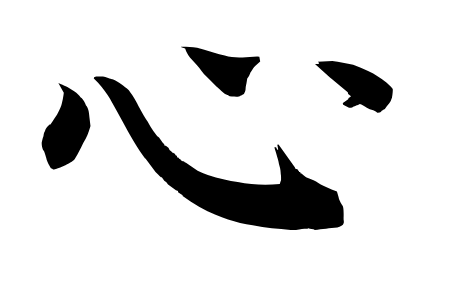
I use the term kokoro 心 over the English term “mind” because in English the “mind” is envisioned as the rational, logical part of us, and the emotions of the “heart’ as separate from the mind. We know that both logic and emotion reside in the brain and are inseparable, but our language and cultural history make a distinction that not only does not exist, but actively harms our understanding of ourselves and others. Kokoro doesn’t have this bias. It includes the rational and the emotional in one package. When we talk about kokoro, we’re not just talking about the rational or the emotional, we’re talking about the whole of people’s mental and emotional psyche.
Mastery of the kokoro is the most important element taught in budo, but in many of the dojos I’ve visited, it gets the least attention. Maybe a few seconds of mokuso 黙想 (meditation) at the beginning and end of practice, but real attention isn’t paid to developing the mind. The focus is usually on developing techniques and physical skills. If it’s a competitive dojo, even less time is placed on developing kokoro skills like mushin 無心, zanshin 残心, fudoshin 不動心, and heijoshin 平常心. Sports-focused dojos seem to be the worst at developing strong kokoro, even as sports science places more and more emphasis on the mind. There are reasons good sports psychologists are well paid.

Great technique and physical power are all well and good, but without strong kokoro they are still going to lose. In 1997, Mike Tyson was incredible, but he lost his fight because he didn’t have control of his kokoro. How often is it noted that a great athlete blew up in a critical moment and lost? You can be in perfect physical condition, but without the same level of mental conditioning, you’re going to lose to someone whose kokoro is calmer, more focused, more immovable, and unchanging.
The budo terms mushin 無心, zanshin 残心, fudoshin 不動心, and heijoshin 平常心, are all written with the character for kokoro 心. They all represent facets of kokoro and ways in which it should be developed. Mushin is “no kokoro,”, the ideal of a quiet, empty mind that reflects the world without imposing its own views and biases. Zanshin is the focused kokoro that pays attention and doesn’t stray and flit about. It remains where it should be. Fudoshin is the “immovable kokoro” that can’t be distracted from what is important, and can’t be off-balanced or startled. Heijoshin is the “everyday kokoro” that remains the same whether you are making dinner or fighting for your life. It is unruffled and unchanging.
Look at Miyamoto Musashi’s Book Of Five Rings. How much of it is about technique?
How much of Heiho Kadensho is about technique? How much of the Taisha Ryu Kaichu is about technique? Takuan Soho’s writings gathered in The Unfettered Mind were intended for some of the greatest martial artists of his age, including Yagyu Munenori and Ono Tadaaki, and yet they have nothing to say about technique. They are entirely about kokoro.

Mastery of technique does not make a budoka. A well-developed and polished kokoro does. The best technique in the world is useless if you panic or freeze.
There are endless stories about the sort of kokoro a budoka should strive to develop for themselves. My favorite is Neko no Myoujutsu 猫の妙術, or “The Mysterious Art of the Cat.” There are numerous translations of it around the internet. I’m fond of Chris Hellerman’s translation. In the story, a samurai is bothered by a rat, so he sets his cat on it. The rodent attacks the cat and drives it away, prompting the samurai to gather all the local ratting cats and send them after it one by one. In turn, each of them is driven back by the furious intruder. Frustrated, the samurai grabs a bokuto and goes after the rat himself. He is completely unable to strike it, and after destroying the room, gives up. In desperation he sends a servant to borrow a famous old ratter from another village. When the servant arrives, the old cat looks like nothing special at all. However, when the cat saunters into the room, the rat freezes in terror and the cat casually catches it in his mouth. That night, all the cats gather and ask the old cat to teach them his secret. In turn they describe their skills and strategies, and the old cat explains the weaknesses of each.
Then the old cat goes on to explain how to do what he does. None of it is technical. It’s entirely kokoro related.
The story was written by Issai Chozan around 1727 and emphasizes the importance of developing your kokoro until there is nothing within to be opposed. It’s not that you shouldn’t study technique, but that physical technique won’t get you to the highest levels of martial ability. You have to work as unceasingly on your kokoro as you do on your physical skills.
Great technique is wonderful, but it can be overwhelmed by powerful adversaries and even more by powerful emotion. We are attached to our skills and techniques. That attachment is exactly the weakness opponents will grasp onto and exploit. The question then is, how do you develop your kokoro to achieve mushin or fudoshin or zanshin or heijoshin?
Issai doesn’t give explicit advice, but the terms he uses point us in the right direction. What he is pointing to is toward a couple of paths for developing this mind: forget yourself, return to nothingness, achieve budo satori, and nothing in your kokoro — “This is written in the I Ching (the Book of Changes).” He says these states are acquired through ishin denshin 以心伝心 and kyōgai betsu-den 教外別伝, both Buddhist terms describing understanding received directly from kokoro to kokoro.
Issai is not saying that you should be a Buddhist to achieve this state. Being a good Buddhist includes renouncing violence, and studying kenjutsu is about as far from that as you can get. The Buddhists had the most highly developed techniques for cultivating the kokoro and achieving this sort of understanding. Issai was pointing to Buddhist understanding of the kokoro and the impossibility of achieving this level of insight through physical practice alone. There are a multitude of practices and techniques for polishing and clearing the kokoro—meditation, chanting, mudras, mandala study, to name some of the most common ones.
If you’re doing budo, you’re willing to work hard at physical activities. Are you willing to put as much effort into developing your kokoro to the highest levels?
Meditating alone will not make you a great martial artist, but neither will physical training alone. The classical martial arts of Japan, the koryu bugei, have practices meant to move one along the proper path for developing both physical technique and kokoro. Yagyu Shinkage Ryu is the most famous for this, but other, less literary arts have these sorts of practices as well. No student can penetrate to the inner secrets, the gokui 極意, of a ryuha without developing their kokoro. The highest teachings are never techniques. They are about the kokoro of the person using the techniques.
Many thanks to Jacques Vorves for editorial support.
In the old days, the Asians (not just Japanese: the idea stems from Chinese thought) had a concept of "the emotional mind" (the subconscious mind) which they thought resided in the heart. If you think about it, in very emotional moments, it is the heart which most notably seems to react, so it was (at that time) a practical observation and guess to talk about the "kokoro" when talking about the actions of the subconscious mind. It's worth noting that when a knowledgeable Asian says someone "has a good heart", they're talking about goodness of controlling spirit that someone has.
The special powers associated with many Asian arts are the powers of the Ki and the powers of the Kokyu-related force. Those powers cannot be controlled by the conscious mind, but must be mediated by the subconscious mind, the "kokoro", idiomatically. The subconscious mind must be developed and strengthened in order to be able to implement and control the Ki-Kokyu skills. "Meditation" is a catchall term for developing the rapport with the subconscious, but the type of mental practices associated with Ki and Kokyu tend to be the practice of manifesting those skills and then gradually conditioning them. 2 cents.